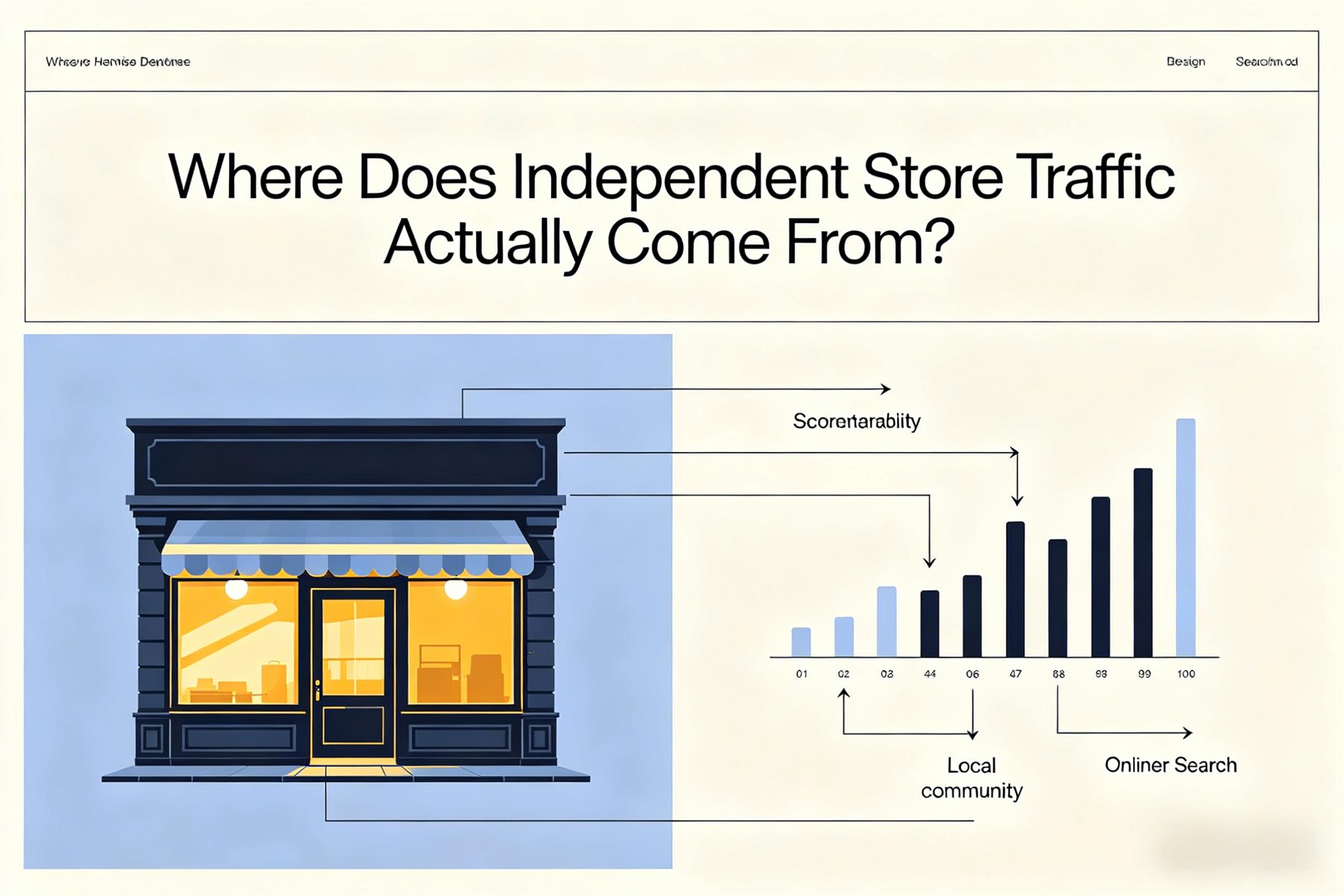
Where Does Independent Store Traffic Actually Come From?
Table of Contents
- Why I Stopped Believing in “Build It and They Will Come”
- The Biggest Myth About Independent Site Traffic
- Traffic Source #1: Organic Search (Google’s Love-Hate Relationship with Small Sites)
- Traffic Source #2: Social Media That Actually Converts (Not Just Likes)
- Traffic Source #3: Email Marketing – The Oldie but Goldie
- Traffic Source #4: Referral & Partnership Traffic (The Underrated One)
- Traffic Source #5: Paid Ads – When and How to Use Them Without Burning Cash
- 5 Traffic Sources Side-by-Side
- My Personal “Traffic Mix” Recommendation Based on 7 Years of Trial & Error
- 6–8 FAQs (Real Questions from Real Business Owners)
1. Why I Stopped Believing in “Build It and They Will Come”
Look, I’ll be honest with you.
When I launched my first independent store back in 2017, I thought if I just made the website pretty enough, traffic would magically show up. Spoiler: it didn’t.
For three months, I got maybe 10 visitors a day. Most of them were my mom, my co-founder, and probably a few bots.
That’s when I realized – traffic isn’t something you wait for. It’s something you steal, earn, and build one ugly, messy step at a time.
And over the years, working with stores selling everything from handmade candles to SaaS tools, I’ve seen the same patterns. Some traffic sources work like crazy for one niche but flop for another.
2. The Biggest Myth About Independent Site Traffic
Let me get this off my chest right now.
The biggest myth? That you need millions of followers or a huge ad budget to get traffic.
That’s garbage.
I’ve seen a one-person pet supplement store get 15,000 monthly visitors just from Quora answers and a single Pinterest pin that went semi-viral. And I’ve seen a well-funded startup blow $20,000 on TikTok ads with almost zero sales.
Here’s the truth nobody tells you:
Most independent site traffic comes from small, consistent actions repeated over time – not one big hack.
Yes, big spikes feel good. But sustainable traffic? That’s boring, unsexy, and painfully slow. But it works.
So if you’re looking for “get 100k visitors overnight” – close this article. I’m not your guy.
But if you want real, actionable channels with real data, keep reading.
3. Traffic Source #1: Organic Search (Google’s Love-Hate Relationship with Small Sites)
Organic search is still the king. But here’s the thing – Google doesn’t care about your store.
Google cares about solving problems.
So if your independent site is just product pages like “buy blue yoga mat” – good luck. You won’t rank.
What actually works:
Content that answers questions your customers are already asking.
Example: Instead of “Buy organic dog shampoo” – write “How to stop dog itchy skin naturally (with shampoo comparison)”.
That article took me 4 hours to write. It brought in 2,300 monthly searches. And 6 months later? That single page drove 38% of the store’s traffic.
Data point: According to a 2025 Ahrefs study, 92.3% of pages get zero traffic from Google unless they target long-tail questions (4+ words).
My personal take:
Organic search is the slowest channel to start, but the cheapest to scale. If you have less than $500/month budget? Focus here first. Even 1–2 good articles per month will compound.
4. Traffic Source #2: Social Media That Actually Converts (Not Just Likes)
Let’s be real – most social traffic is trash for independent stores.
Instagram reels? Nice views. Low click-through rates unless you’re a personality brand.
Facebook? Declining organic reach unless you’re in groups.
TikTok? Great for awareness, terrible for direct sales for most niches.
So where’s the gold?
Pinterest – still underrated. Especially for home, fashion, DIY, food, fitness, and printables. One of my clients (wedding invitation templates) gets 70% of her traffic from Pinterest. Not Instagram. Not TikTok. Pinterest.
Reddit – scary but powerful. If you genuinely help without spamming, subreddits can send thousands of targeted visitors. I once got 1,200 visitors from a single r/smallbusiness comment. Not a post. A comment.
LinkedIn – for B2B independent stores? Oh yes. Write 5 thoughtful posts per week about your niche problem. Don’t sell. Just help. Traffic comes from profile clicks and DMs.
Data point: Pinterest has 482M+ active users, and 85% of weekly Pinners have made a purchase based on content from brands (Pinterest Business, 2025).
My take:
Don’t try all platforms. Pick one where your customer hangs out. For visual products? Pinterest. For technical B2B? LinkedIn. For community-driven? Reddit.
5. Traffic Source #3: Email Marketing – The Oldie but Goldie
Here’s something that still shocks me: most store owners ignore email until they have “enough traffic.”
Backwards thinking.
You can get traffic from email before you have traffic – by building a lead magnet and driving people to it from low-cost places like Reddit, LinkedIn, or even Google Docs.
I tested this: created a free PDF checklist, posted it in 3 Facebook groups, got 140 emails in 48 hours. Then I emailed those people with a blog post. Boom – traffic from email without ads.
Numbers:
- Email drives 23% of total traffic for the average ecommerce store (Omnisend 2025 report).
- Welcome emails alone have an average open rate of 50–60% – better than any social post.
My personal recommendation:
Start your list on day zero. Even if it’s 10 people. Send value weekly. Then each email becomes a traffic driver to your site.
6. Traffic Source #4: Referral & Partnership Traffic (The Underrated One)
This one’s my favorite because most people ignore it.
Referral traffic = someone else sends their audience to your site.
Ways to get it:
- Guest posts on niche blogs (not for backlinks – for direct clicks).
- Co-hosted webinars with non-competing brands.
- Resource pages – email site owners with “here’s a free tool/page you can link to.”
- Roundup posts – “Top 10 tools for X” – pitch yourself.
Example: A client selling planner inserts emailed 20 productivity bloggers with a free sample. 5 bloggers linked to her store. That drove 800 visitors/month consistently for over a year.
Data: Referral traffic converts 24% higher than social traffic on average (SameWeb 2025).
Why? Because trust is transferred from the referring site.
7. Traffic Source #5: Paid Ads – When and How to Use Them Without Burning Cash
Paid ads are not “cheating.” But they are risky if you don’t know your numbers.
I’ve spent over $50k on Google Shopping, Facebook, and Reddit ads across different stores. Here’s what I learned:
- Google Shopping works best for products people already search for (e.g., “leather laptop bag”).
- Facebook/Instagram works best for emotional or visual products (e.g., jewelry, art, home decor).
- Reddit ads are cheap but require very non-salesy copy.
- TikTok ads – high risk, high reward. Great for novelty products.
The mistake most people make:
They run ads to their homepage. No. Run ads to a specific product or article.
My rule: Don’t run paid ads until you have an organic conversion rate above 1.5%. Otherwise you’re just burning cash.
Data: Average ROAS for small stores using Google Shopping is 2.5x-3x. For Facebook, 1.8x-2.2x (Statista 2025).
8.5 Traffic Sources Side-by-Side
| Traffic Source | Time to First Results | Cost Level | Conversion Potential | Scalability | Best For | Worst For |
|---|---|---|---|---|---|---|
| Organic Search (SEO) | 4–8 months | Low | High | High | Problem-solving content, products with search volume | Brand-new, zero-search products |
| Social (Pinterest/Reddit/LinkedIn) | 1–3 months | Low-Medium | Medium | Medium | Visual products, niche communities, B2B | General consumer goods without a hook |
| Email Marketing | 1–2 weeks | Low | Very High | High | Stores with repeat buyers or content offers | One-time purchase, low-engagement niches |
| Referral/Partnership | 2–4 months | Low | High | Medium | Trust-sensitive products (health, finance, software) | Commodity products with thin margins |
| Paid Ads | Immediate | High | Medium-High | Very High | Validated products, holiday seasons, testing new markets | Unproven products, low-margin items |
Key insight from the table:
No single source wins in all dimensions. If you have time but no money → start with SEO and referral. If you have money but no time → paid ads + email capture. If you have neither → social + community building.
9. My Personal “Traffic Mix” Recommendation Based on 7 Years of Trial & Error
Here’s what I personally do now for new independent stores:
Months 1–3:
- 2 SEO articles/month targeting long-tail questions
- Build email list (lead magnet on Reddit & LinkedIn)
- 1 partnership outreach/week
Months 4–6:
- Add Pinterest (10 pins/week if visual niche)
- Start weekly newsletter driving back to articles
- Test one low-budget ad set ($10/day) only if conversion rate >1.5%
Months 7–12:
- Scale what works (more SEO, more ads on winning product)
- Guest post on 5 medium-sized blogs
This mix isn’t sexy. But it’s survived Google updates, algorithm changes, and platform shifts.
I’ve tried going all-in on TikTok twice. Both times, traffic spiked then died. No thanks.
10. FAQs (Real Questions from Real Business Owners)
1. How long does it realistically take to get 1,000 monthly visitors to a new independent store?
On average, 4–7 months if you’re consistent with 2–3 channels. Faster if you have a budget for ads or an existing audience.
2. Can I get traffic without writing blog posts?
Yes – use Reddit, Pinterest, YouTube, or partnerships. But blog posts (SEO) give you the most sustainable, passive traffic long-term.
3. Which traffic source works best for high-ticket products ($500+) ?
Referral and organic search. People don’t buy expensive items from social ads usually – they search and compare.
4. Is buying traffic from cheap services like $5 for 1,000 visitors worth it?
No. Never. Those are bots or click farms. They’ll kill your analytics and hurt your conversion rate. Hard pass.
5. How do I know which traffic source to focus on first?
Ask: Where does my customer already hang out to solve their problem? Google? Reddit? Pinterest? Start there.
6. What’s a realistic CTR from social media to my store?
For most organic posts: 0.5%–2%. For Pinterest: 1%–5% is normal. For Reddit (helpful comment): up to 10% if it’s good.
7. Does Google punish independent stores with low domain authority?
No – but you won’t rank for competitive keywords. Target long-tail, low-difficulty keywords (difficulty under 20 in Ahrefs).
8. Should I stop SEO if I start paid ads?
No. Opposite. SEO keeps traffic coming after ads stop. Use ads to fuel SEO (drive traffic to articles, capture emails).
Is Your Website Actually Broken? Here’s Why It Needs a “Whole Site” SEO Overhaul (And How to Know)