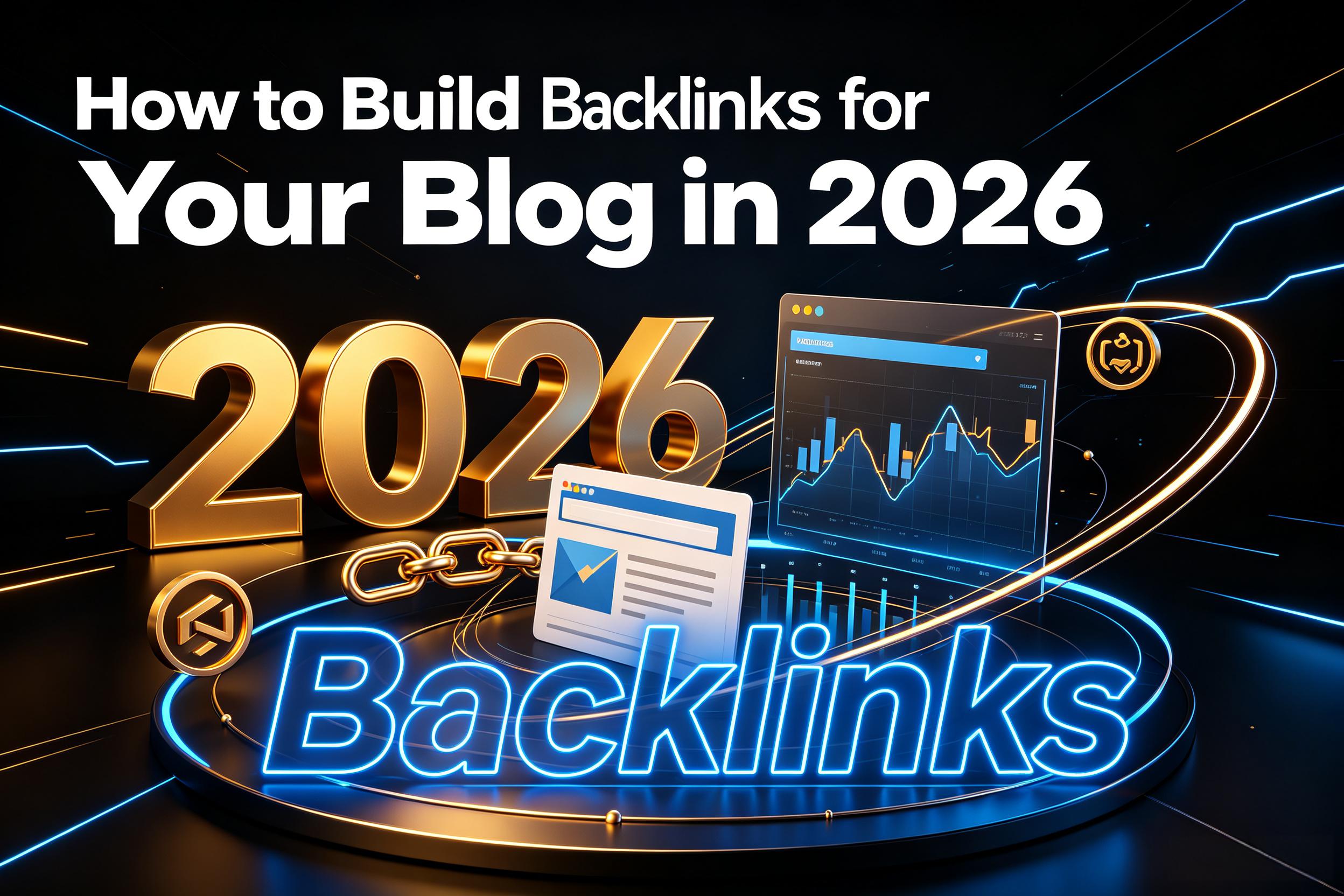
How to Build Backlinks for Your Blog in 2026: A No-Nonsense Guide That Actually Works
Article Directory
- Why I’m Writing This and Why You Should Care
- What Exactly Is a Backlink? (And Why Google Still Cares)
- The Backlink Landscape in 2026 – What’s Changed
- 7 Proven Strategies to Get Backlinks That Actually Move the Needle
- 4.1. Guest Posting – Still Works, If You Do It Right
- 4.2. Broken Link Building – The Win-Win Tactic
- 4.3. Unlinked Brand Mentions – Free Links You’re Leaving on the Table
- 4.4. The Skyscraper Technique – Create Something Worth Linking To
- 4.5. Resource Page Outreach – Get Listed Where It Matters
- 4.6. Competitor Backlink Analysis – Borrow Their Success
- 4.7. Digital PR and Real-World Events – The Underrated Approach
5.What to Avoid – Link Building Mistakes That Can Get You Penalized
6.How to Measure Your Backlink Success – The Metrics That Matter
7.Comparative Analysis of Link Building Methods (With Data Table)
8.What I’ve Learned After Years of Doing This
9.Frequently Asked Questions (FAQ)
1.Why I’m Writing This and Why You Should Care
Look, I’ll be honest with you. When I first started in digital marketing, I thought backlinks were some kind of dark magic. Everyone kept telling me I needed them, but nobody could explain how to get them without spending a fortune or doing something that felt vaguely sketchy.
Fast forward a few years, and here’s the truth: backlinks are still one of Google’s top three ranking factors. They’re not going anywhere. But the way you build them in 2026? That’s changed. A lot.
If you’re running a blog, an e-commerce store, a SaaS company, or even a local service business, backlinks are the difference between showing up on page one and being buried somewhere nobody will ever find you. This guide is for anyone who needs to grow their website traffic – no matter what industry you’re in.
I’m going to walk you through what actually works right now, what’s a waste of time, and how to approach link building without losing your mind. I’ve made plenty of mistakes along the way, so you don’t have to.
2. What Exactly Is a Backlink? (And Why Google Still Cares)
A backlink is simply a link from one website to another. When someone else’s site links to yours, search engines see it as a “vote of confidence.” The logic is pretty straightforward: if other people are willing to point their readers to your content, it must be worth reading.
Think of it like this. If you’re looking for a good restaurant, you’d probably trust recommendations from people who’ve actually eaten there, right? Backlinks work the same way for Google. Each link tells the search engine, “This content is valuable, credible, and useful”.
But here’s the catch: not all links are created equal. A link from a respected industry publication is worth infinitely more than a hundred links from random, low-quality directories. Google is smart enough to recognize the difference, and in 2026, the algorithm is better than ever at spotting manipulative link patterns.
3. The Backlink Landscape in 2026 – What’s Changed
This is where things get interesting. A few years ago, link building was almost entirely about chasing high Domain Authority scores. Get a link from a site with DA 80+, and you’d see your rankings jump almost overnight.
Today? It’s more complicated.
Search engines have gotten much better at understanding context and relevance. A link from a moderately authoritative site in your exact niche is often more valuable than a link from a generic high-DA site that has nothing to do with your topic.
And then there’s the AI factor. In 2026, you’re not just trying to rank in Google’s traditional search results. You’re also trying to get mentioned in AI Overviews, ChatGPT answers, and Perplexity citations. These AI engines work differently – they look for consensus across multiple reputable sources. A single high-DA link doesn’t cut it anymore. You need consistent mentions across trusted publications in your space.
Another big shift: safe link building in 2026 is about more than just avoiding penalties. It’s about building a link profile that looks natural, diverse, and topically relevant to your competitors. If your backlink profile looks drastically different from the sites ranking above you, Google will notice – and not in a good way.
4. 7 Proven Strategies to Get Backlinks That Actually Move the Needle
Let’s get into the practical stuff. Here are the strategies I’ve personally used and seen work for clients across multiple industries.
4.1. Guest Posting – Still Works, If You Do It Right
Guest posting gets a bad rap because so many people do it badly. Spamming “write for us” pages with generic pitches and low-quality articles? That’s a fast track to nowhere.
But done right, guest posting is still one of the most reliable ways to earn high-quality backlinks. The key is to find reputable sites in your niche that actually have engaged audiences. Look for sites where people are reading and commenting, not just collecting articles for SEO purposes.
What works: writing genuinely helpful content that adds value to the host site’s audience. Include one or two contextual links back to your site – ideally within the body of the article, not just in the author bio. Those contextual links carry more weight.
4.2. Broken Link Building – The Win-Win Tactic
This is one of my favorites because it helps everyone involved. Here’s how it works:
- Find broken links on websites in your niche (use a tool like Dead Links Checker or Screaming Frog)
- Create content that would be a good replacement for whatever was originally linked
- Reach out to the site owner, point out the broken link, and suggest your content as a replacement
The site owner gets to fix a broken link and improve their user experience. You get a quality backlink. It’s a win-win. And because you’re offering genuine value, response rates tend to be higher than cold outreach.
4.3. Unlinked Brand Mentions – Free Links You’re Leaving on the Table
Sometimes people mention your brand, product, or content without actually linking to you. These are “unlinked mentions,” and they’re basically free backlinks waiting to be claimed.
Use tools like Google Alerts, Ahrefs Content Explorer, or BuzzSumo to track mentions of your brand across the web. When you find an unlinked mention, reach out to the author with a polite request to add a link. Since they’re already talking about you, most people are happy to oblige.
4.4. The Skyscraper Technique – Create Something Worth Linking To
This one takes more effort, but the results can be huge. The idea is simple:
- Find content in your niche that’s already earned a lot of backlinks
- Create something significantly better – longer, more detailed, with better data, clearer visuals, or a more useful perspective
- Reach out to the websites linking to the original piece and show them your improved version
As Emma Vaughan from Equator put it, “The best way to get a link is to make linkable content first and foremost”. You can’t outsource this part – the content genuinely needs to be excellent.
4.5. Resource Page Outreach – Get Listed Where It Matters
Resource pages are curated lists of helpful links on a specific topic. Many websites – especially educational institutions and industry blogs – maintain these pages to help their audiences.
Find resource pages in your niche using search operators like:
keyword intitle:"resources"keyword inurl:resourceskeyword "useful links"
Reach out to the page owner and explain why your content deserves a spot on their list. Be specific about what value you’re adding to their readers.
4.6. Competitor Backlink Analysis – Borrow Their Success
Here’s a simple truth: if someone is willing to link to your competitor, they might be willing to link to you too. Especially if you have something better to offer.
Use tools like Ahrefs, Semrush, or Moz to analyze your competitors’ backlink profiles. Identify the sites linking to them, prioritize the ones that are most relevant to your niche, and reach out with a compelling pitch.
4.7. Digital PR and Real-World Events – The Underrated Approach
This is one of the most underrated strategies in 2026. Instead of just chasing links, you create genuine newsworthy events or campaigns that people want to talk about.
A few examples I’ve seen work well:
- Hosting a community event and getting local media coverage
- Running a scholarship program (though this is getting harder to justify for links alone)
- Sponsoring events and creating something media-worthy at your booth
The key here is that the links come naturally because people are genuinely interested in what you’re doing. These tend to be higher quality and more sustainable than purely transactional link-building tactics.
5. What to Avoid – Link Building Mistakes That Can Get You Penalized
I’ve seen people get burned by these, so let’s run through them quickly.
Buying links from low-quality sites. Google’s algorithm can spot most paid link schemes, and if you get caught, you risk a penalty. Some link marketplaces are more legitimate than others in 2026, but proceed with extreme caution.
Overusing exact-match anchor text. If every link to your site uses the exact same commercial keyword as anchor text, it looks unnatural. Mix it up with branded anchors, naked URLs, and semantic variations.
Mass-produced, low-quality guest posts. AI makes it easy to churn out content at scale, but Google is getting better at detecting low-quality, low-effort contributions.
Building links from irrelevant sites. A link from a site that has nothing to do with your industry doesn’t help much. At worst, it can hurt your reputation with search engines.
Going all-in on one tactic. Diversification is your friend. If you only ever build links through guest posts, or only through directory submissions, it looks unnatural. Spread your efforts across multiple methods.
6. How to Measure Your Backlink Success – The Metrics That Matter
You can’t improve what you don’t measure. Here’s what I look at:
Domain Authority / Domain Rating. Moz’s DA and Ahrefs’ DR are industry-standard metrics that estimate how authoritative a domain is based on its link profile. Higher is generally better, but don’t fixate on these numbers alone.
Referring Domains. The number of unique websites linking to you matters more than the total number of backlinks. Ten links from ten different sites is better than a hundred links from one site.
Topical Relevance. This is harder to measure but increasingly important. Are the sites linking to you in the same or related industries? If so, those links carry more weight.
Referral Traffic. A backlink that sends no visitors isn’t worthless for SEO, but it’s less valuable than one that actually brings people to your site. In 2026, the consensus among experts is that links should ideally drive real user acquisition, not just signal authority.
Anchor Text Distribution. A healthy mix of branded, generic, and keyword-rich anchors looks more natural than an over-optimized profile.
7. Comparative Analysis of Link Building Methods (With Data Table)
Here’s my honest take on the main methods, based on years of trial and error:
| Method | Effort Required | Cost | Link Quality Potential | Risk of Penalty | Best For |
|---|---|---|---|---|---|
| Guest Posting | High | Low-Medium | Medium-High | Low | Most sites, all industries |
| Broken Link Building | Medium | Low | Medium-High | Very Low | Sites with existing content |
| Unlinked Mention Recovery | Low-Medium | Low | Medium | Very Low | Brands with some existing awareness |
| Skyscraper Technique | Very High | Medium | High | Very Low | Sites with resources to create excellent content |
| Resource Page Outreach | Medium | Low | Medium | Low | Niche-specific sites |
| Competitor Backlink Analysis | Medium | Low-Medium | Medium-High | Low | Competitive industries |
| Digital PR / Events | Very High | Medium-High | Very High | Very Low | Brands with budget and creative capacity |
| Directory Submissions | Low | Low | Low | Medium | Local businesses (specific, relevant directories only) |
If you’re starting from zero, begin with guest posting and broken link building. They’re the most straightforward and carry the lowest risk. As you build momentum, invest in skyscraper-style content and digital PR for the highest-quality links.
8. What I’ve Learned After Years of Doing This
Here’s something I wish someone had told me when I started: link building is a marathon, not a sprint.
I’ve had months where I sent out thirty outreach emails and got one link in return. It’s frustrating. It’s tedious. But over time, those links add up, and they compound in ways that are hard to see day-to-day.
The best links I’ve ever earned came from relationships I built over years – not from a single email. People I’d connected with at conferences, collaborated with on projects, or just had genuine conversations with. Those relationships turned into guest post invites, mentions in their articles, and recommendations to their networks.
If you’re doing outreach, treat it like relationship-building, not link-farming. As Pilar Lewis from Marketri put it: “SEO outreach done well isn’t just about building links, rather it’s about building relationships”. That mindset shift makes everything easier – and more sustainable.
Also, don’t obsess over DA. I’ve spent way too much time chasing links from “high authority” sites that sent zero traffic and didn’t move the needle. A link from a smaller, niche site with an engaged audience often produces better results than a generic link from a big-name domain.
9. Frequently Asked Questions (FAQ)
Q1: What’s the difference between dofollow and nofollow backlinks?
Dofollow links pass “link equity” (SEO value) from one site to another. Nofollow links don’t. Both can bring referral traffic, but only dofollow links directly help your search rankings. Most backlink-building efforts should focus on earning dofollow links from reputable sites.
Q2: How many backlinks do I need to rank on page one?
There’s no magic number – it depends on your competition. The best approach is to analyze your competitors’ backlink profiles and aim to match or exceed their quality and quantity. In many niches, 10-20 high-quality backlinks can make a significant difference.
Q3: Is guest posting still a good strategy in 2026?
Yes, but only if done well. Low-quality guest posts on irrelevant sites are a waste of time. High-quality guest posts on reputable, niche-relevant sites with engaged audiences are still one of the most effective link-building methods.
Q4: How much should I pay for a backlink?
Prices vary wildly depending on the site’s authority. In 2026, some link-building services charge anywhere from $100-$500 per link depending on DA tier. But remember – buying links is against Google’s guidelines, and you should proceed with caution and only from reputable sources.
Q5: What’s the fastest way to get backlinks?
Unlinked brand mentions are probably the fastest if you already have some brand awareness. Broken link building can also deliver relatively quick results. But “fast” in link building still takes weeks or months – there are no real shortcuts that are both safe and effective.
Q6: How do I find broken links to build backlinks from?
Use free tools like Dead Links Checker or more advanced options like Screaming Frog SEO Spider. Enter a relevant domain, find the broken links, and reach out to the site owner with a replacement suggestion.
Q7: What’s the skyscraper technique?
It’s a method where you find content that’s already earned many backlinks, create a significantly better version, and then reach out to everyone linking to the original to show them your improved content. It requires serious effort but can yield excellent results.
Q8: Are backlinks from .edu or .gov sites worth more?
Historically, yes, because these sites are seen as highly authoritative. However, relevance matters more than the domain extension alone. A .edu link in your niche is great; a .edu link from an unrelated department is less valuable than a relevant industry link.
Q9: Can I build backlinks without doing outreach?
Yes – by creating truly remarkable content that people naturally want to link to. This is the “organic” approach, and it works, but it’s slow. Most successful sites combine organic link attraction with strategic outreach to accelerate results.
Q10: How do I know if my backlinks are helping or hurting my site?
Monitor your search rankings and traffic over time. Use tools like Google Search Console to see which links Google recognizes. If you suspect you have harmful backlinks, consider using Google’s disavow tool to distance your site from them.